
Pouch types
Stand-Up vs Flat Bottom vs Three-Side Seal Pouch: Which Should You Choose?
· 6 min read · By the Pactrum packaging team
Flexible pouches come in a few main shapes. Each one changes how your product looks on the shelf, how easy it is to fill, and what it costs per piece. Here is a plain comparison to help you choose.
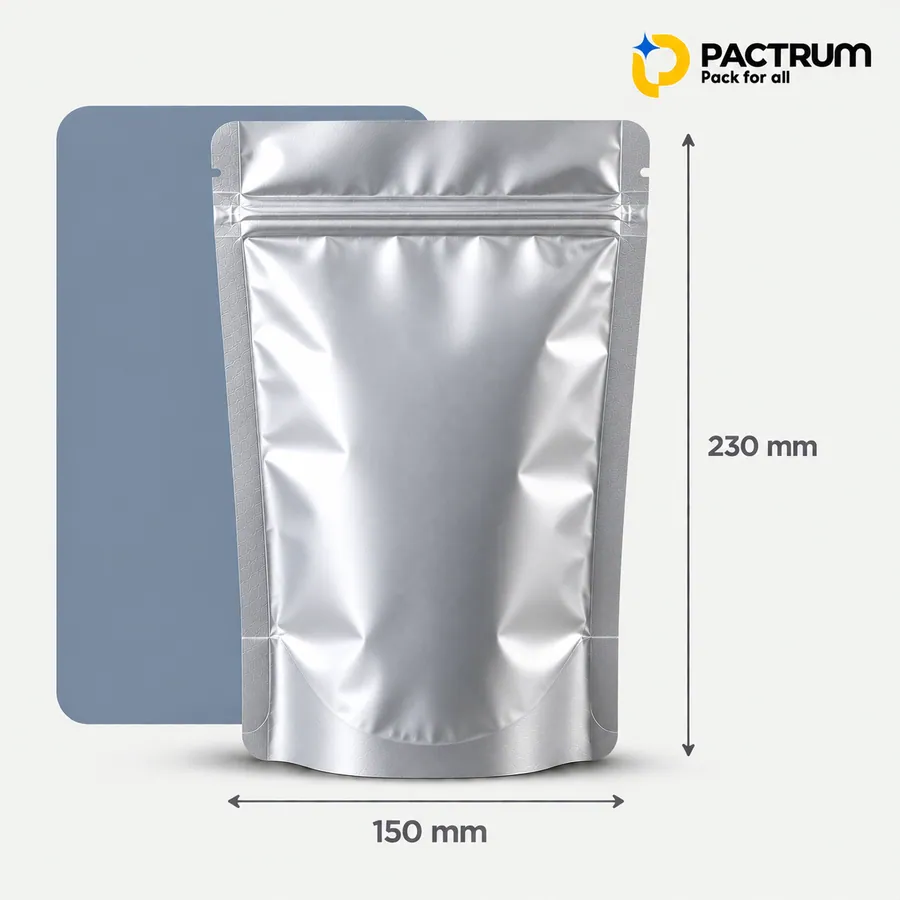
Stand-up zipper pouch (doypack)
A stand-up pouch has a gusset (fold) at the bottom that opens up so the pouch stands on its own. Most have a press-to-close zipper.
- Best for: dry fruits, spices, snacks, tea, pulses, pet treats.
- Why choose it: stands on the shelf, resealable, good value, many finishes (transparent, metallised, kraft, matt).
- Keep in mind: the front is slightly curved when filled, so large flat artwork looks best on a flat bottom pouch.
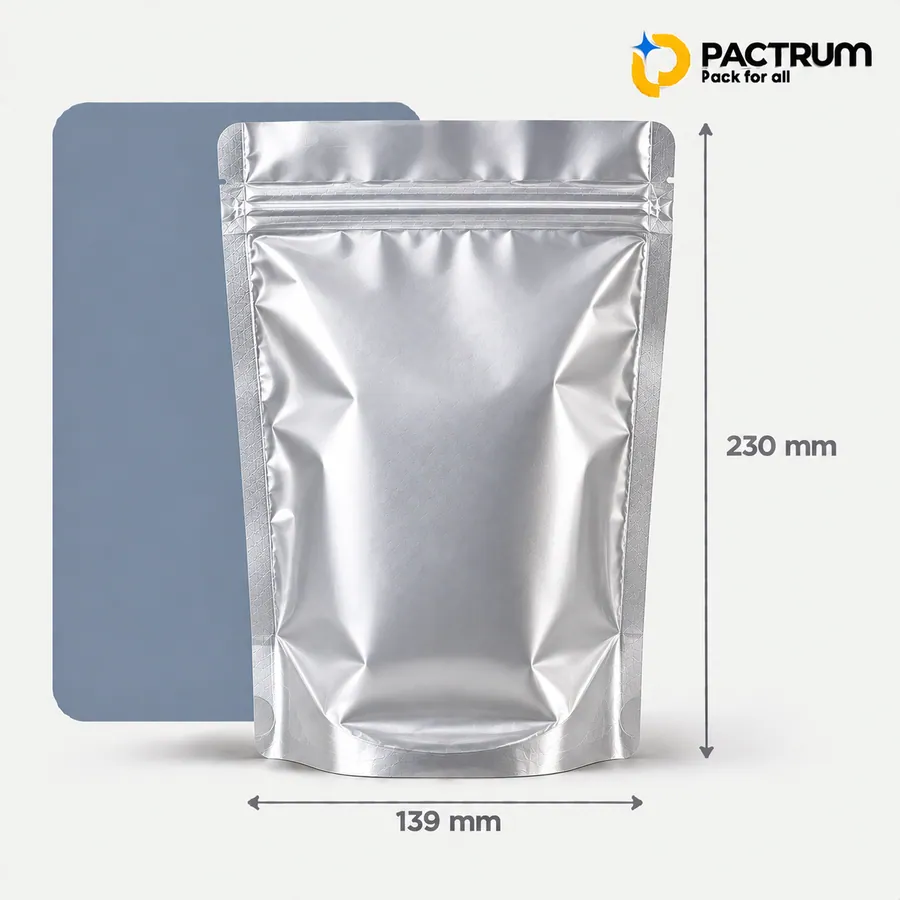
Flat bottom pouch (box pouch)
A flat bottom pouch has a square base and side gussets, so it stands like a box and holds more for its height.
- Best for: coffee, premium tea, pet food, dry fruit gift packs, 500 g to 1 kg packs.
- Why choose it: premium look, very stable, five printable faces, more volume in a shorter pack.
- Keep in mind: it usually costs more per piece than a stand-up pouch of similar capacity.
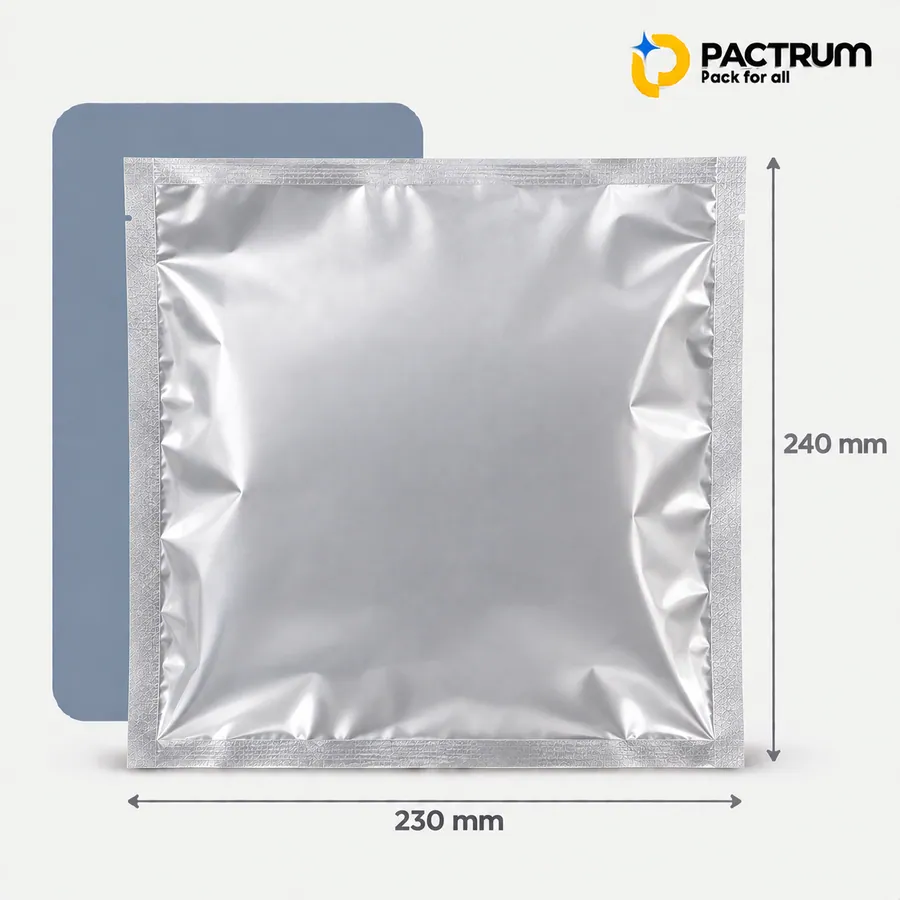
Three-side seal pouch (flat pouch)
A three-side seal pouch is a flat pouch sealed on three sides; you fill from the top and seal it.
- Best for: sachets, samples, single portions, seasoning, flat items.
- Why choose it: economical and easy to store and ship flat.
- Keep in mind: it does not stand on a shelf; it is usually hung or placed in a box.
Center seal pouch (pillow pack)
The familiar chips and namkeen pack. Center seal pouches suit fast-moving snacks and bulk refill packs, especially on form-fill-seal lines.
Spout pouch
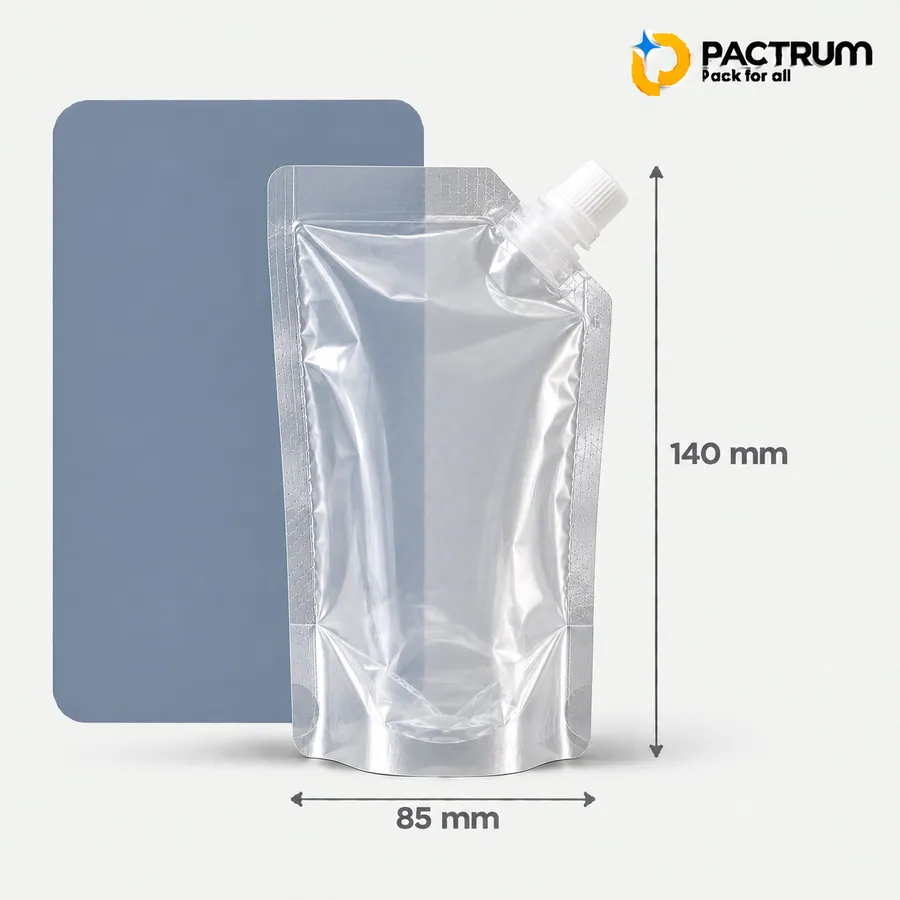
Spout pouches carry liquids and semi-liquids: juice, oil, ghee, sauces, hand wash. They use less material than bottles and pour cleanly.
Side-by-side comparison
| Stand-up | Flat bottom | Three-side seal | Center seal | Spout | |
|---|---|---|---|---|---|
| Stands on shelf | Yes | Yes, very stable | No | No | Yes |
| Resealable zipper | Yes | Yes | Optional | Usually no | Screw cap |
| Shelf look | Good | Premium | Basic | Basic | Good |
| Cost per piece | Medium | Higher | Low | Low | Higher |
| Best use | Most dry foods | Coffee, premium | Sachets | Snacks | Liquids |
Quick decision guide
- Is it a liquid? Choose a spout pouch.
- Is it a single portion or sample? Choose a three-side seal pouch.
- Do you want a premium, box-like pack for coffee, tea or gifts? Choose a flat bottom pouch.
- Everything else, especially dry foods sold in retail: a stand-up zipper pouch is the safe default.
Then pick the size with our pouch size chart.
Frequently asked questions
- What is the difference between a stand-up pouch and a flat bottom pouch?
- A stand-up pouch has a folded bottom gusset and a slightly rounded front. A flat bottom pouch has a square base and side gussets, so it stands like a box, looks more premium and holds more for its height, but usually costs more per piece.
- Is a doypack the same as a stand-up pouch?
- Yes. Doypack is a common name for a stand-up pouch with a bottom gusset.
- Which pouch is cheapest per piece?
- Three-side seal and center seal pouches usually cost the least per piece because they use simpler construction. Stand-up pouches cost a little more but stand on the shelf and reseal.
- Which pouch is best for liquids?
- A spout pouch with a screw cap is designed for liquids such as juice, oil, ghee and sauces.
Pouches mentioned in this guide
Need help choosing a pouch?
Ready-stock pouches from 100 pieces. Ask our team or Pactrum AI.